
Grocery Logistics: What Is It and How Does It Work?
Whether you’re new to shipping to grocery distribution centers and warehouses, or an experienced shipper trying to improve delivery performance, Estes has the expertise, resources, and tools you need. Below you'll find answers to many of the most frequently asked questions about grocery logistics — including ways to ship with more confidence and fewer chargebacks.
Grocery Logistics Basics
Grocery logistics is the process of planning, transporting, storing, and delivering food, beverages, and other grocery products throughout the supply chain. It requires close coordination among suppliers, carriers, distribution centers, and retailers to keep products moving efficiently and ensure grocery stores have the inventory they need. LTL shipping plays an important role by efficiently moving smaller shipments from manufacturers and suppliers to grocery distribution centers and other destinations.
As a preferred carrier for dozens of the nation’s largest grocers, Estes plays a key role in keeping grocery products moving efficiently through the supply chain. Estes’ preferred carrier status reflects its ability to consistently meet the service, compliance, and logistics needs of top grocers like Walmart, Amazon, Target, Sam’s Club, and Albertsons.
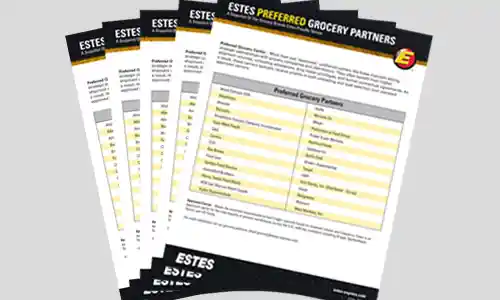
Visit our Grocery, Food, and Beverage Logistics page or view our Estes Grocery Solutions brochure to learn more about Estes’ services.
Grocery logistics coordinates the movement and storage of food, beverages, and other grocery products from manufacturers and suppliers through distribution centers (DCs) and ultimately to retailers. It combines transportation, warehousing, inventory management, and distribution to keep products moving efficiently and stores supplied with the inventory they need.
Manufacturers and suppliers prepare products for shipment, and carriers transport them to grocery DCs and warehouses. Upon arrival, incoming products are received, stored or staged, and combined with products from other suppliers to fulfill individual store orders. These products are then routed from DCs and warehouses to grocery stores for replenishment.
Throughout the process, suppliers, carriers, and retailers coordinate inventory, transportation, delivery schedules, and receiving requirements to maintain a reliable flow of products through the grocery supply chain.
Estes has decades of experience in transporting grocery products from suppliers and manufacturers to grocery DCs and warehouses. Our vast network supports nearly 7,000 next-day lanes, allowing us to transport one and two-day grocery shipments on time and as promised.
Grocery logistics combines frequent inventory replenishment with strict retailer delivery requirements, high-volume distribution center operations, and, for some products, specialized food-safety and temperature-control needs. These factors can make grocery shipping especially dependent on reliable, well-coordinated transportation.
Grocery retailers may establish specific requirements for delivery dates and appointments, palletization, labeling, documentation, and receiving. Suppliers may also be measured against OTIF and other performance standards, with noncompliance potentially resulting in chargebacks.
Not all grocery freight requires specialized transportation. Many shelf-stable products can move through conventional LTL networks, but carriers must still reliably execute against the retailer’s delivery and receiving requirements.
With our 99.4% success rate in meeting all Time Critical guarantees for shipments to grocery warehouses, Estes can help you replenish your shelf-stable inventory faster, avoid chargebacks, and maintain high compliance scores. Learn more about Estes’ grocery logistics services.
The grocery supply chain is the network of producers, manufacturers, suppliers, transportation providers, distribution centers, and retailers involved in getting food, beverages, and other grocery products from their source to consumers.
Products typically move from producers to manufacturers or suppliers, then through transportation and distribution networks before reaching grocery stores. Grocery distribution centers play a central role by receiving products from many suppliers, managing inventory, and distributing products to individual stores based on demand.
The grocery supply chain describes this entire network, while grocery logistics focuses on planning and managing how products are transported, stored, and distributed within it.
Food and beverage logistics covers the transportation, storage, and distribution of food and beverage products across a wide range of customers and channels, while grocery logistics focuses specifically on supplying grocery retailers and their distribution networks.
Because grocery logistics serves the retail grocery channel, suppliers often need to meet retailer-specific requirements for delivery dates and appointments, palletization, labeling, documentation, and other receiving procedures. Grocery retailers may also measure supplier performance through OTIF and other compliance standards.
Think of grocery logistics as a specialized part of the food and beverage logistics category that emphasizes meeting the delivery and receiving requirements of grocery retailers and distribution centers.
Grocery distribution is the process of receiving, storing, managing, and distributing food, beverages, and other grocery products to retail stores. Grocery distribution centers (DCs) typically serve as centralized hubs where products from many manufacturers and suppliers are received and then organized into shipments for individual stores.
After products arrive at a DC, they may be stored or staged until needed. The DC then combines products from multiple suppliers into store-specific orders and transports those orders to grocery retail stores for replenishment.
LTL carriers support grocery distribution by transporting products from manufacturers and suppliers to grocery DCs, while the retailer or its distribution provider typically manages distribution from the DC to individual stores.
Grocery distribution centers (DCs) receive products from many manufacturers and suppliers, manage and store that inventory, and assemble shipments for delivery to individual grocery stores. They serve as centralized hubs that help retailers efficiently replenish multiple stores across a geographic area.
Inbound shipments are typically scheduled according to retailer delivery and appointment requirements. After freight is unloaded and received, products may be stored, staged, or cross-docked depending on inventory needs and product requirements. The distribution center then combines products from multiple suppliers into store-specific orders for outbound delivery.
Because grocery DCs must coordinate high volumes of inbound freight with available docks, receiving labor, storage capacity, and store replenishment schedules, predictable and reliable inbound deliveries are especially important.
Estes’ consistent, high-volume deliveries to grocery consignees enable us to drop trailers at many DCs — minimizing handling, adding flexibility, reducing congestion and potential detention charges, and making the receiving process more seamless.
Lumpers are third-party workers or companies hired by grocery warehouses and distribution centers (DCs) to unload and, in some cases, sort and segregate inbound freight.
When an LTL carrier arrives for delivery, the grocery warehouse or DC may require the carrier to use its designated lumper service rather than allowing the driver to unload the freight. The lumper fee is typically charged back to the carrier, and then to the shipper, depending on the shipper’s pricing agreement.
Lumper charges can vary significantly based on the consignee and the complexity of the shipment. Fees may be influenced by pallet count, case count, SKU count, restacking, sorting, or segregation requirements. Mixed-SKU shipments, for example, can result in higher lumper costs because they require additional handling.
For grocery shippers, it’s important to understand that lumper fees are generally driven by the receiving warehouse, not the carrier. Working with an experienced grocery carrier can help provide greater visibility into these costs and, in some cases, offer programs that simplify how lumper and other grocery-specific accessorial charges are managed.
Through its Grocery Consolidation Service (GROC 750-80), Estes makes delivery costs more manageable and predictable by allowing shippers to pay a simple flat rate in lieu of potential fees for lumpers and other services such as sorting, segregating, and palletizing.
Being a preferred carrier with a grocery consignee means the carrier has an established relationship with the grocery warehouse or distribution center and has demonstrated the ability to consistently meet that facility’s service, compliance, and operational expectations.
Preferred carrier relationships can provide meaningful advantages when delivering grocery freight. Depending on the consignee, these may include more flexible appointment windows, express or priority doors, preferred unloading, drop-trailer programs, and greater familiarity with the facility’s receiving processes. These efficiencies can help reduce delays, improve compliance, and lower the risk of unnecessary accessorial charges or chargebacks.
However, preferred carrier status does not mean the carrier controls the consignee’s receiving operation. The grocery warehouse ultimately determines appointment availability, receiving hours, and compliance requirements. Instead, preferred carriers offer the advantage of already understanding how to operate effectively within those requirements.
For shippers, aligning with a preferred carrier can mean fewer surprises, better communication, and a more efficient path from pickup through final delivery.
Estes’ status as a preferred carrier to dozens of the nation’s largest grocers demonstrates our success in consistently meeting their most demanding service, compliance, and logistics needs.
With our 99.4% success rate in meeting all Time Critical guarantees for shipments to grocery warehouses, Estes can help you replenish your shelf-stable inventory faster, avoid chargebacks, and maintain high compliance scores. Learn more about Estes’ grocery logistics services.
LTL & Grocery Transportation
LTL shipping supports grocery logistics by giving manufacturers and suppliers an efficient way to move smaller, more frequent shipments to grocery distribution centers without requiring a full truckload. By consolidating freight from multiple shippers within the same transportation network, LTL carriers can improve transportation efficiency and support frequent inventory replenishment.
Experienced LTL carriers also help suppliers meet grocery retailers’ delivery requirements through reliable transit, appointment coordination, shipment visibility, careful freight handling, and execution against required delivery dates and windows. When multiple suppliers have freight moving to the same grocery distribution center, consolidation can also allow several shipments to arrive on the same trailer, potentially reducing inbound truck traffic, and improving receiving efficiency.
Estes offers a range of grocery consolidation services to enhance efficiency, including palletizing, sorting, and segregation. Our preferred carrier status for dozens of the nation’s top grocers reflects our ability to consistently meet their service, compliance, and logistics needs.
Learn more about Estes’ services by visiting our Grocery, Food, and Beverage Logistics page or viewing our Estes Grocery Solutions brochure.
Choose an LTL carrier with experience delivering to grocery distribution centers (DCs), reliable transit performance, broad network coverage, strong freight-handling practices, and the ability to meet retailer-specific delivery requirements. Look for capabilities such as appointment coordination, shipment visibility, responsive customer support, and experience executing against retailer routing guides and required delivery windows.
Cost is also important, but consider overall transportation performance rather than freight rates alone. Reliable service can help reduce the additional costs associated with missed appointments, delays, damaged freight, redeliveries, and retailer chargebacks.
In addition to being a preferred carrier for many of the nation’s largest grocery chains, Estes offers unique solutions designed to meet timing requirements with confidence, mitigate chargebacks, and provide greater predictability:
- Time Critical Guaranteed Service - Our industry-leading guaranteed solution offers 24/7/365 freight monitoring and customer support as well as date-specific services to help ensure MABD, NSNL, and RDD appointment compliance
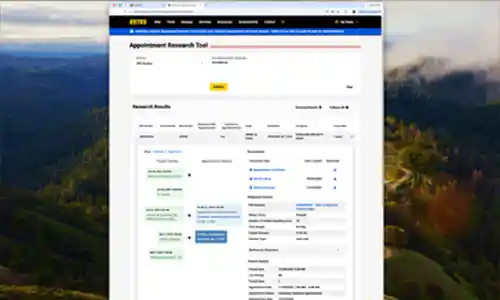
- Appointment Research Tool - Our clear record of key appointment and transit milestones makes it easy to confirm delivery performance, reduce chargebacks, and strengthen trust across your supply chain
- Grocery Consolidation Service (GROC 750-80) - Estes allows shippers to pay a simple flat rate for delivery to grocery DCs in lieu of potential fees for appointments, detention, storage, lumper service, sort and seg, and other services
To ship to a grocery distribution center, start by reviewing the retailer’s routing guide and purchase order requirements. Grocery retailers often establish specific requirements for palletization, labeling, documentation, delivery dates and windows, appointments, and receiving procedures.
Prepare the shipment according to those requirements, choose the appropriate transportation service, and allow sufficient transit time to meet the retailer’s required delivery date. Many grocery distribution centers also require scheduled delivery appointments, making advance coordination especially important.
The shipper is generally responsible for preparing compliant freight, while the carrier executes the transportation portion of the shipment. Working with an LTL carrier experienced in grocery deliveries can help ensure reliable transit, effective appointment coordination, shipment visibility, and delivery according to retailer requirements.
LTL and truckload can both be effective for grocery shipments. LTL is typically better suited for smaller shipments that don't require an entire trailer, while truckload is often more efficient for larger shipments that fill most or all of a trailer.
LTL gives grocery suppliers the flexibility to ship smaller quantities more frequently and can help support regular replenishment across multiple grocery distribution centers. Truckload provides dedicated trailer capacity for larger shipments and generally involves fewer freight-handling points between pickup and delivery.
Many grocery suppliers use both modes depending on shipment size, destination, product requirements, and delivery needs. Choosing the appropriate mode for each shipment can help balance transportation costs, inventory levels, and reliable delivery to grocery customers.
Estes offers LTL, Volume LTL, and Truckload options, allowing grocery suppliers to choose the right option for their shipping volume and frequency needs.
Grocery consolidation is the process of combining smaller shipments from multiple suppliers moving to the same grocery distribution center (DC) or warehouse. LTL shipping provides a natural form of grocery consolidation by combining compatible freight from multiple shippers within the same transportation network.
For grocery suppliers, this can provide an efficient way to move smaller, more frequent shipments while improving trailer utilization. When multiple suppliers have freight destined for the same DC, consolidating those shipments onto the same trailer can also potentially reduce inbound truck traffic, dock congestion, and the number of separate deliveries the DC must process.
Estes offers a range of grocery consolidation services, including lumper service, palletization, sort and seg, and others. Estes’ Grocery Consolidation Service (GROC 750-80) lets shippers pay a single flat rate for consolidation, making consolidation fees more manageable and predictable.
As another measure to improve efficiency and relieve congestion, Estes also has drop trailer agreements with many major grocery retailers.
Drop trailers are trailers that a carrier leaves at a shipper’s facility or grocery distribution center (DC) to be loaded or unloaded without requiring the driver to wait. The carrier can retrieve the loaded or empty trailer later, allowing transportation and warehouse operations to work on separate schedules.
For grocery shippers, drop trailers can provide greater flexibility to prepare freight for pickup and may help reduce detention charges by minimizing the time drivers spend waiting during loading and unloading. Carriers benefit from reduced driver dwell time and better equipment utilization, while grocery DCs can unload trailers based on available dock space and receiving labor. Together, these efficiencies can help reduce congestion, improve freight flow, and support more reliable grocery transportation.
Estes has drop trailer agreements with many grocery retailers. We drop trailers wherever possible to help streamline the receiving process, reduce costs, and meet the tightest delivery windows.
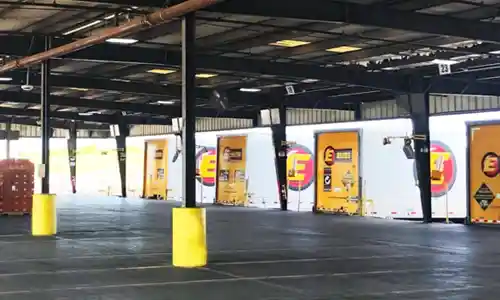
Grocery transportation costs can be reduced by looking beyond the freight rate alone and focusing on the total cost of delivering into grocery warehouses and distribution centers.
Transporting grocery products poses different challenges than many other types of freight handled by LTL carriers. Shippers should look for carriers that offer purpose-built grocery solutions designed to meet these challenges by mitigating costs and reliably meeting strict performance standards.
Shippers should align with trusted carriers that have established, preferred relationships with their grocery consignees. Carriers that understand each consignee’s receiving requirements, appointment processes, and compliance expectations can help shippers stay within compliance and reduce exposure to costly chargebacks, delays, and other accessorial expenses.
Ultimately, the lowest freight rate doesn’t always equal the lowest transportation cost. The right carrier relationship can reduce the total cost of getting freight from the shipper’s dock through the consignee’s door.
Estes offers solutions designed to mitigate and simplify the costs associated with transporting products to grocery DCs, including:
- Time Critical Guaranteed Service - Our 24/7/365 freight monitoring and date-specific services help ensure MABD, NSNL, and RDD appointment compliance
- Appointment Research Tool - Our clear record of key appointment and transit milestones allows shippers to prove delivery performance and reduce chargebacks
- Grocery Consolidation Service (GROC 750-80) - Estes allows shippers to pay a simple flat rate for deliveries in lieu of the range of potential fees
- Drop Trailer Agreements - Estes drops trailers wherever possible to help reduce costs, as well as streamline the receiving process and meet tight delivery windows
Grocery Delivery & Compliance Requirements
Retailer routing guides outline the specific shipping, delivery, appointment, labeling, documentation, and compliance requirements suppliers must follow when delivering freight into a retailer’s warehouse or distribution center (DC). Failure to meet these requirements can result in delayed deliveries, refused shipments, additional fees, or chargebacks.
For LTL carriers to help suppliers stay compliant, communication is critical. Suppliers need to clearly communicate the retailer’s routing guide and any specific compliance requirements to their carrier before the freight is picked up. The carrier can then plan around appointment requirements, MABD dates, delivery windows, documentation, and other consignee-specific expectations.
Working with an LTL carrier that has experience delivering into grocery and retail distribution centers can provide another advantage, but the carrier can only manage requirements it knows about. Ultimately, strong communication between the supplier and carrier is one of the best ways to improve compliance, avoid unnecessary costs, and ensure a smoother delivery process.
Estes’ experience delivering to retailer DCs and warehouses is a valuable asset, fostering better communication with shippers, stronger understanding of their compliance requirements, and more effective planning.

OTIF stands for On-Time, In-Full. It is a performance measure used by many grocery retailers to determine whether suppliers deliver the correct products and quantities within the retailer’s required delivery window.
The “On-Time” portion measures whether freight arrives according to the retailer’s delivery requirements, which may include an RDD, MABD, NSNL window, or scheduled appointment. The “In-Full” portion measures whether the retailer receives the products and quantities it ordered.
Suppliers are generally responsible for shipping the correct products and quantities, while LTL carriers primarily support the on-time portion through reliable transit, appointment coordination, shipment visibility, and delivery within required windows. Strong OTIF performance can help suppliers maintain retailer compliance and avoid potential chargebacks.
Estes’ Time Critical Guaranteed Service offers reliable date-specific solutions to help ensure MABD, NSNL, and RDD appointment compliance, avoid chargebacks, and maintain high OTIF scores. Our 99.4% success rate in meeting all Time Critical guarantees for shipments to grocery warehouses provides even more peace of mind.
RDD, MABD, and NSNL are terms grocery retailers may use to define when suppliers’ shipments should arrive at their distribution centers. RDD, or Required Delivery Date, identifies the date a shipment is expected to be delivered. MABD, or Must Arrive By Date, generally establishes the latest date by which a shipment must arrive. NSNL, or No Sooner, No Later, establishes an acceptable delivery window in which arriving either too early or too late may be considered noncompliant.
These requirements help grocery retailers coordinate inbound freight with available docks, receiving labor, inventory needs, and store replenishment schedules. They can also be used to measure on-time performance and determine compliance with retailer requirements.
Terminology and requirements vary by retailer, so suppliers should always follow the definitions and delivery rules established in the retailer’s routing guide, purchase order, or vendor agreement.
Estes’ Time Critical Guaranteed Service provides shippers with the options of guaranteed MABD, NSNL, or RDD delivery — all backed by our 24/7/365 freight monitoring and customer support.
Grocery delivery appointments are typically controlled by the grocery warehouse or distribution center (DC), with the LTL carrier scheduling delivery based on the consignee’s available appointment dates and receiving capacity.
Delivery appointments scheduled by preferred carriers can offer significant advantages. Preferred carriers may enjoy more flexible appointment windows, express doors, preferred unloading, drop-trailer programs, and established relationships with the consignee — all of which can help freight move through the receiving process more efficiently.
However, it’s important to understand that the consignee ultimately controls appointment availability. Even a preferred carrier is subject to the dates and times the grocery warehouse or DC makes available. If the grocer only offers appointments outside of the shipment’s MABD window, there may be little the carrier can do to change that.
That’s why shippers should communicate MABD dates and other critical delivery requirements upfront and work with carriers that understand the consignee’s receiving process. Preferred carrier relationships can create greater flexibility, but successful grocery delivery still requires coordination between the shipper, carrier, and consignee.
As a preferred carrier for many of the nation’s largest grocery chains, Estes is often able to provide the most timely and flexible delivery options available.
LTL carriers can help shippers reduce their exposure to retailer chargebacks by providing greater visibility, documentation, and expertise around retailer compliance requirements.
The ability to provide shippers with information and documentation related to key delivery milestones is extremely helpful; this allows shippers to better understand and, when appropriate, dispute retailer chargebacks. Accurate information surrounding appointments, delivery performance, and other shipment details can determine whether a chargeback is legitimate and provide supporting evidence when challenging one.
However, the best chargeback is the one that never happens. Shippers shouldn’t underestimate the value of aligning with a preferred carrier that has established relationships with their retail and grocery consignees. These carriers understand receiving processes, appointment requirements, MABD expectations, and common compliance issues, helping prevent problems before they result in a chargeback.
Ultimately, the strongest LTL carriers will offer both proactive prevention and the documentation shippers need to defend against chargebacks when necessary.
Estes is a preferred carrier to dozens of the nation’s largest grocers — a recognition of our success in consistently meeting demanding service, compliance, and logistics needs.
Our Time Critical Guaranteed Service offers 24/7/365 freight monitoring and customer support — and a 99.4% success rate in meeting all Time Critical guarantees for shipments to grocery warehouses.
And our Appointment Research Tool provides key documents and a clear record of appointment and transit milestones, making it easier to confirm delivery performance and challenge chargebacks. To learn more, please watch our short ART video.
Grocery suppliers can improve compliance by understanding each retailer’s routing guide and building those requirements into their normal shipping processes. This includes verifying purchase order requirements, preparing and labeling freight correctly, providing accurate documentation and ASNs when required, and planning shipments around required delivery dates and appointments.
Suppliers should also monitor compliance performance and chargebacks to identify recurring problems and keep their processes current as retailer requirements change.
Working with an LTL carrier experienced in grocery deliveries can support improved compliance through close freight oversight, clear communication, real-time tracking, accessible documentation — and reliable delivery within required windows.
Estes’ best-in-class Time Critical Guaranteed Service (TCG) guarantees on-time pickups, deliveries, appointments, and damage-free shipments. All TCG shipments enjoy round-the-clock oversight and support from our Customer Care team in addition to real-time shipment tracking.
And our Appointment Research Tool provides key documents and a clear record of appointment and transit milestones, making it easier to confirm delivery performance and challenge chargebacks when necessary.
Many grocery retailers allow suppliers to dispute chargebacks they believe were assessed incorrectly. Each retailer has unique dispute procedures, documentation requirements, and deadlines, so grocery suppliers should follow the process outlined in the retailer’s routing guide, vendor agreement, or compliance program.
When disputing chargebacks, documentation such as Proofs of Delivery, Bills of Lading, appointment confirmations, arrival timestamps, and shipment tracking records can help prove whether delivery requirements were met. LTL carriers that provide accurate, accessible shipment records can give suppliers valuable documentation when investigating or disputing a chargeback.
Estes' Appointment Research Tool (ART) provides easy access to key documents and milestones, making it easy to investigate and confirm delivery performance and challenge chargebacks when necessary. For a quick overview, please watch our short ART video.
Preparing Grocery Freight for Shipment
Many grocery retailers establish specific palletization requirements for shipments delivered to their distribution centers. These requirements may specify pallet size and type, maximum height and weight, stacking patterns, load securement, product separation, labeling, and other standards designed to protect products and support efficient receiving.
Requirements vary by retailer and product, so suppliers should follow the applicable routing guide and purchase order instructions when preparing freight. The supplier is generally responsible for properly palletizing the shipment, while the LTL carrier is responsible for carefully handling and transporting the freight after pickup.
Estes’ Shipper’s Guide and Freight Packaging Best Practices provide general recommendations for palletizing and preparing freight for shipment. For labeling-specific recommendations, please watch our short How To Accurately Label Your Freight video.

A GMA pallet is the standard 48-inch by 40-inch pallet widely used for grocery, food and beverage, consumer packaged goods, and other freight shipments throughout North America. Originally associated with the Grocery Manufacturers Association (GMA), its standardized dimensions work efficiently with common warehouse racking, forklifts, pallet jacks, and transportation equipment.
Many grocery retailers specify 48" × 40" pallets because standardization can improve trailer utilization and make freight easier to receive, handle, store, and distribute. Individual retailer requirements can vary, however, so suppliers should always follow the pallet specifications in the applicable routing guide.
A GS1-128 pallet label is a standardized barcode label used to identify a pallet and communicate shipment information as it moves through the supply chain. Grocery distribution centers can scan these labels to identify incoming freight and connect it with shipment, product, and receiving information.
GS1-128 pallet labels commonly include a Serial Shipping Container Code (SSCC) that uniquely identifies the pallet. They can help grocery retailers automate receiving, improve inventory accuracy, support product traceability, and match incoming freight with purchase orders and Advance Ship Notices (ASNs).
Suppliers are generally responsible for creating and applying labels according to each retailer’s requirements, while carriers help protect the labeled freight during transportation and handling.
Mixed grocery shipments are commonly accepted, but can require additional handling at the grocery warehouse or distribution center, particularly when multiple SKUs are shipped on the same pallet or shipment.
Many grocery warehouses utilize third-party lumpers to unload, sort, segregate, and prepare freight for receiving. Depending on the consignee, lumper charges may be based not only on the number of pallets or weight of the shipment, but also on the number of SKUs being handled. As SKU count and sorting requirements increase, the cost to unload the shipment can increase as well.
For that reason, shippers should understand the consignee’s receiving requirements before building mixed shipments and communicate the SKU count, pallet configuration, and any special handling requirements to their carrier upfront.
Working with a carrier experienced in grocery can also help shippers better anticipate these costs and identify opportunities to consolidate freight efficiently without unintentionally creating additional lumper or sort-and-segregate expenses.
Estes’ grocery experience can be an asset in helping to identify opportunities to reduce mixed grocery consolidation costs. As an additional measure, Estes’ Grocery Consolidation Service allows shippers to pay a simple flat rate for consolidation rather than individual fees for lumpers, sort-and-seg, palletizing, detention, and other services.
Grocery freight should be packaged and palletized to protect products throughout the LTL shipping process while meeting the receiving requirements of the grocery retailer. Because LTL freight may be loaded, unloaded, and transferred as it moves through a carrier’s network, packaging should be strong enough to withstand normal handling, stacking, and transit conditions.
Use durable cartons or cases, build stable pallets without excessive overhang, distribute weight appropriately, and secure freight with stretch wrap, banding, corner boards, or other suitable materials. Shipping and retailer-required labels should also remain secure, legible, and accessible.
Retailers may have unique requirements for pallet size, height, weight, stacking, labeling, and product separation. With this in mind, suppliers should always follow the retailer’s routing guide when preparing grocery freight for shipment.
Estes’ Shipper’s Guide and Freight Packaging Best Practices provide general guidelines for palletizing and preparing freight for shipment. For general labeling guidelines, please watch our short How To Accurately Label Your Freight video. For retailer-specific guidelines, please refer to their routing guides.
Food Safety, Regulations & Documentation
Food shippers should understand federal requirements designed to protect food from contamination and unsafe conditions during transportation. The Food Safety Modernization Act (FSMA) and FDA’s Sanitary Transportation of Human and Animal Food rule establish requirements for shippers, loaders, carriers, and receivers involved in transporting food.
Depending on the product and shipment, requirements may address vehicle and equipment sanitation, temperature control, protection from contamination, communication of food-safety requirements, training, and recordkeeping. Responsibilities can vary among shippers, carriers, loaders, and receivers, so all parties should understand which requirements apply to their own operations.
Additional federal, state, or product-specific requirements may also apply depending on the food being transported.
Estes is exempt from FSMA regulations because we do not transport temperature-controlled goods, and all food shipments we handle are in sealed containers. We do, however, adhere to safe handling requirements for food product shipments in accordance with all applicable federal guidelines.

The Food Safety Modernization Act (FSMA) is a U.S. food-safety law designed to prevent foodborne illness and contamination throughout the food supply chain. Signed into law in 2011, FSMA gave the FDA expanded authority to establish preventive food-safety requirements covering areas such as food production, handling, storage, and transportation.
For grocery shippers and carriers, one of the most relevant regulations established under FSMA is the Sanitary Transportation of Human and Animal Food rule. This rule establishes requirements designed to protect food from unsafe conditions during transportation and defines responsibilities for certain shippers, loaders, carriers, and receivers.
As noted above, Estes is exempt from FSMA regulations because we do not transport temperature-controlled goods, and all food shipments we handle are in sealed containers.
Sanitary transportation refers to the practices used to protect food from contamination and other unsafe conditions while it is being transported. The FDA's Sanitary Transportation of Human and Animal Food rule establishes requirements for certain shippers, loaders, carriers, and receivers involved in transporting food by motor vehicle or rail.
Depending on the food and transportation operation, sanitary transportation practices can include using clean and suitable trailers and equipment, maintaining appropriate temperatures when required for food safety, preventing contamination or cross-contact from other cargo, and communicating applicable food-safety requirements among shippers and carriers.
Responsibilities vary depending on the parties' roles and agreements. For example, a shipper may specify required sanitary or temperature conditions, while a carrier may be responsible for maintaining those conditions during transportation.
Estes provides clean, dry, and well-maintained vans and adheres to safe handling requirements for food product shipments in accordance with all applicable federal guidelines. All food shipments we handle are in sealed containers and do not require temperature-controlled transportation.
Carriers help maintain food safety by using clean, suitable transportation equipment and following the sanitation, handling, and temperature requirements established for the shipment. Depending on the food being transported, this can include inspecting and cleaning trailers, protecting products from contamination and incompatible cargo, maintaining required temperatures, and carefully handling freight throughout transit.
Food safety is a shared responsibility. Shippers communicate applicable product and transportation requirements, while carriers follow the sanitary and handling requirements they are responsible for during transportation. When applicable, carriers may also be responsible for employee training and maintaining records required under FSMA’s Sanitary Transportation rule.
As noted above, Estes adheres to safe handling requirements for food product shipments in accordance with all applicable federal guidelines. All food shipments we handle are in sealed containers and do not require temperature-controlled transportation.
Temperature-controlled shipping requirements specify the conditions needed to keep certain food products within an appropriate temperature range during transport. These vary by product and may address the type of equipment used, required temperature range, precooling, temperature maintenance and monitoring, and protection of products during loading and unloading.
The shipper generally identifies and communicates applicable temperature requirements, while the carrier follows these and other requirements during transit. Under FSMA’s Sanitary Transportation of Human and Animal Food rule, appropriate temperature control is required when necessary to prevent food from becoming unsafe.
Not all grocery freight requires temperature-controlled transportation. Many shelf-stable food and non-food grocery products can move in standard dry trailers, while refrigerated, frozen, and other temperature-sensitive products require transportation appropriate to their specific needs.
Estes transports shelf-stable food and non-food grocery products that do not require temperature-controlled transportation.
Food shipments may require standard transportation documents, retailer-required records, and, for certain products, food-safety documentation. Common examples include Bills of Lading, Proofs of Delivery, purchase order information, Advance Ship Notices (ASNs), and delivery appointment records.
Depending on the product and applicable food-safety requirements, additional records may be needed for temperature control or sanitary transportation. Requirements vary by shipment and retailer, so shippers should understand both the regulations that apply to their products and the documentation requirements of the receiving grocery retailer.
Accurate transportation and delivery records can also help suppliers demonstrate compliance and investigate or dispute transportation-related retailer chargebacks.
Estes’ Appointment Research Tool captures key documents and transit milestones, making it easy for grocery suppliers to verify compliance and dispute chargebacks when needed.
Improving Grocery Shipping Performance
Grocery delivery delays can be reduced by selecting the right carrier, clearly communicating delivery requirements, and utilizing service options designed specifically for time-sensitive grocery freight.
Shippers should strongly consider aligning with a preferred carrier that has established relationships with their grocery consignees. Preferred carriers typically have a better understanding of receiving procedures, appointment requirements, delivery windows, and other consignee-specific challenges, helping freight move through the delivery process more efficiently.
Just as important is communication. Critical dates, timing requirements, appointment windows, and other delivery expectations should be clearly communicated to the carrier before the shipment moves. A carrier can’t prioritize a requirement it doesn’t know exists.
For shipments where hitting delivery windows is crucial, shippers should also consider upgrading to time-critical services such as MABD rather than relying solely on standard LTL delivery. The increased visibility, prioritization, and accountability around the required delivery date often justify the additional cost.
Ultimately, reducing grocery delays comes down to three things: Choose the right carrier, communicate critical requirements upfront, and use the right service level when the delivery date matters.
When timing is everything, Estes’ Time Critical Guaranteed Service provides a 99.4% success rate in meeting all Time Critical guarantees for shipments to grocery warehouses. Available MABD, NSNL, and RDD options are available, allowing shippers to meet the specific timing requirements of their grocery consignees.
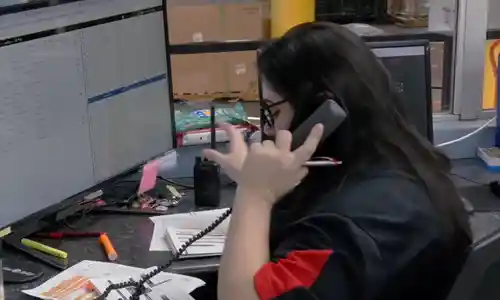
Grocery shippers can reduce freight damage by using durable packaging, building stable pallets, following retailer requirements, and choosing an LTL carrier with strong freight-handling practices. Because LTL shipments may be loaded, unloaded, and transferred as they move through a carrier’s network, proper freight preparation and careful handling are both important.
Use packaging appropriate for the product, distribute weight evenly across pallets, avoid excessive overhang, and secure loads to prevent shifting during transit. Suppliers should also follow retailer requirements for pallet size, stacking, load securement, and product separation.
Carrier performance matters as well. Careful loading, unloading, securement, and handling throughout the LTL network can help grocery freight arrive intact and ready for receiving.
Estes strongly invests in specialized equipment designed to protect freight in transit, including captive beams and Webb walls. Watch our How Estes Protects Your Freight In Transit video to learn more about our commitment to safeguarding freight.
Freight visibility helps grocery shippers monitor shipments in transit, identify potential delays, and respond to exceptions before they disrupt retailer delivery requirements. Timely shipment status and estimated arrival information can be especially valuable when freight must meet strict delivery windows and scheduled appointments.
When a potential delay is identified early, shippers and carriers have more time to communicate with the retailer, manage appointments, and take corrective action when possible. Better visibility can help reduce missed deliveries, improve retailer communication, and potentially avoid costs associated with redeliveries, detention, and transportation-related chargebacks.
Estes’ real-time Shipment Tracking tool makes it easy for grocery shippers to monitor their freight, and our Appointment Research Tool captures key delivery milestones and documents.
When additional attention is required, Estes’ Time Critical Guaranteed Service offers 24/7/365 freight oversight and customer support.