LTL Freight Shipping FAQs: What Is LTL and How Does It Work?
Whether you're new to less-than-truckload (LTL) or an experienced shipper, Estes offers a range of tools and resources to simplify your freight shipping. Below you'll find answers to many of the most frequently asked questions about LTL as well as links to helpful guides, how-tos, and videos.
Most Commonly Asked LTL Questions
LTL refers to transporting shipments that weigh between 150 and 15,000 pounds, occupy only a portion of a trailer—or less than a truckload—and are usually palletized.
LTL shipping can be an efficient, cost-saving freight transportation solution since shippers share trailer space with other shippers and pay only for the space that their freight occupies.
Estes delivers reliable LTL freight shipping solutions throughout all 50 states, as well as Canada, Mexico, Puerto Rico, and the Caribbean.
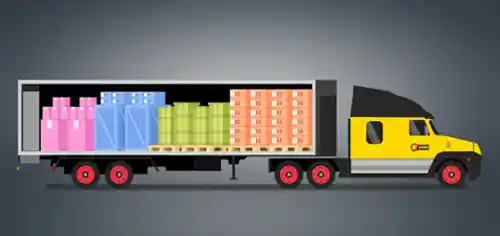
LTL carriers consolidate freight from multiple shippers into a single trailer and often use a hub-and-spoke network to move the freight to the final destinations; this is the same type of network that airlines use to efficiently route flights and passengers across both short and long distances.
In this model, spokes (typically smaller service centers) handle short-haul or local deliveries, while hubs (larger service centers) also consolidate freight for transport over long distances. Short haul freight may be transported directly between spokes, while long haul freight may be routed to and between hubs before traveling outward to spokes for local, final delivery.
Estes’ vast network includes 300+ service centers and 26 hubs, supporting timely and efficient transport of both short- and long-haul shipments throughout North America.
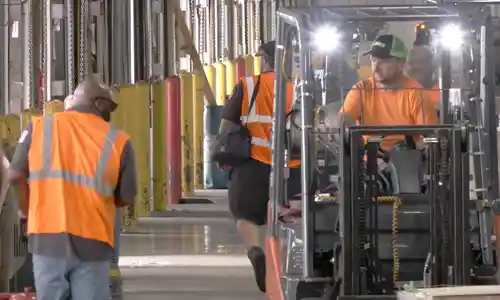
LTL freight shipments are usually palletized, weigh between 150 and 15,000 lbs., and only take up a portion of a trailer. As shipments get larger, but don’t fill out a trailer, they may qualify as volume LTL. Volume LTL shipments weigh 5,000 lbs. or more and take up at least eight linear feet of trailer space. Shipments that weigh 30,000 lbs. or more and take up at least 48 linear feet of the trailer may qualify as truckload freight.
Visit our Less Than Truckload (LTL) and Volume LTL and Truckload pages to learn more about the Estes service that best meets your freight requirements.
In LTL shipping, freight from multiple shippers is consolidated onto a single trailer. LTL shippers pay only for the portion of the trailer that their freight occupies and split the cost of the truck with other shippers.
LTL shipping also decreases shippers’ carbon footprints. Consolidating shipments reduces the number of underfilled trucks on the road, which lessens fuel consumption and carbon emissions.
Interested in shipping your LTL freight more sustainably? Visit our Sustainability page or read our Annual Sustainability Report to see how Estes is paving the way for a greener future.
When choosing between LTL and parcel, weight and packaging are two key considerations. LTL shipping is more cost-effective than parcel for shipments with weights of 150 lbs. or greater, and parcel carriers generally restrict package weights to 150 lbs. or less. LTL shipping is also intended to accommodate palletized shipments, while parcel shipping is intended to accommodate individual boxes.
Thanks to its vast, nationwide network, Estes provides shorter transit times than many LTL carriers—including nearly 7,000 next-day lanes. Estes also offers Final Mile delivery, allowing shippers to ship larger, heavier freight to residences and commercial destinations without docks.
LTL freight shipping may be categorized in many ways, including the following:
Carrier network types
-
National - Short- and long-haul freight can be transported nationwide entirely within a carrier’s own network
-
Regional/multi-regional - Short-haul freight can be transported in regions within a carrier’s network, but longer hauls may be transferred to another carrier to compete delivery
-
Hub-and-spoke - Short-haul freight can be transported directly between spokes (smaller service centers) or consolidated at hubs (larger service centers) for efficient long-haul transport between hubs before being routed to the spoke closest to the final destination
Delivery timing
-
Standard - Less time-sensitive LTL freight is transported at the standard rate to meet estimated delivery times
-
Guaranteed - More time-sensitive LTL is transported at the standard rate, but closely serviced and monitored to ensure delivery at or by a guaranteed time; shippers will be compensated if times are not met as promised
-
Expedited - More time-sensitive LTL is transported more directly or with fewer stops in order to meet an earlier-than-standard delivery time
Load sizes
-
LTL (less-than-truckload) - Loads between 150 and 15,000 lbs., and which only take up a portion of a trailer, qualify as LTL loads
-
Volume LTL - Loads between 5,000 and 15,000 lbs., or which take up eight or more feet of space within the trailer, may qualify as volume LTL
Estes’ vast network allows us to exceptional regional short-haul LTL coverage in addition to reliable nationwide long-haul service. Our 300+ service centers offer local expertise while our 26 hubs facilitate efficient LTL, volume LTL, and truckload shipping across the nation as well as the border.
Estes also offers industry-leading Guaranteed Delivery solutions that include more standard benefits than any other carrier.
Here’s a helpful overview of the LTL freight end-to-end shipping process:
- Shipper prepares freight - The shipper secures freight on pallets or in crates, creates labels with all required information, and places labels where they will be easily visible from multiple angles
- Shipper requests a rate quote - After determining the weight, dimensions, and class of the freight, the shipper submits this information to a carrier to receive a shipping quote
- Shipper creates a Bill of Lading (BOL) - The shipper provides a Bill of Lading to the carrier with shipment details, including addresses, contacts, item descriptions, freight class, special instructions, and more
- Carrier picks up the freight shipment - After the shipper submits a pickup request, the carrier arrives to pick up their shipment
- Shipment arrives at the origin service center - The carrier transports the shipment to the local service center, and it’s unloaded, sorted, and consolidated with other freight shipments heading in the same direction
- Shipment is routed through network - The consolidated shipment is loaded onto a trailer to be transported to the next service center; a local or regional shipment may go directly to its destination service center, while a long-haul shipment may be consolidated and routed between hub service centers prior to reaching its destination
- Shipment arrives at destination service center - After arriving at its destination service center, the freight shipment is unloaded, sorted, and loaded onto a truck for final delivery
- Shipment is delivered - The freight shipment is delivered to its final destination, such as a retail distribution center or a small business. If a dock is not available, a liftgate may be used to offload the freight
Whether you’re new to LTL or an experienced shipper, Estes offers a range of tools to simplify your freight shipping. Visit the Digital Shipping Tools section of our website for helpful overviews and guides designed to simplify your shipping preparation and management.
Freight classes are set by the National Motor Freight Classification (NMFC)—a tool developed by the National Motor Freight Traffic Association (NMFTA). NMFC groups all commodities into 13 classes (50 through 400). Freight that is more transportable—denser, sturdier, and more easily handled—receives a lower classification; freight that is more prone to damage or theft, or is more difficult to handle, receives a higher one.
If you don't know the class of your shipment, determining your freight's density (as measured in pounds per cubic foot) will give you a great starting point. NMFC classes largely reflect the density of the freight, and you can see the classes that correspond to each density here.
Transit times vary according to distance as well as the freight carrier's capabilities. Freight carriers with larger LTL networks can offer streamlined transit with more direct routing and fewer stops.
Estes provides exceptionally timely and efficient transport, with nearly 7,000 next-day lanes connecting a network of 300+ service centers and 26 hubs; more than 60% of our next-day lanes are direct.
Want to instantly determine Estes’ freight transit time for a particular route? Use our Transit Time Calculator.
The method of tracking LTL shipments will reflect where the shipment was booked:
- LTL carriers provide shipment tracking on their websites, and may also provide tracking data via API or EDI platforms
- 3PLs present tracking data from carriers on their online portals
- Transportation Management Systems (TMS) present tracking data from carriers on their software platforms
In each case, the shipment would be searchable by entering the PRO, BOL, or other reference number provided when the shipment was booked.
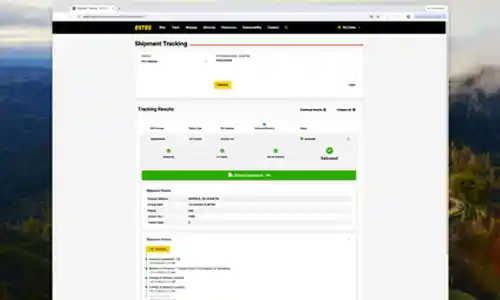
Estes provides detailed, real-time updates—including estimated delivery times and Stops Away notifications—through its Shipment Tracking tool. Estes also offers API and EDI connectivity for shippers that want to integrate our shipment tracking data into their business systems.
LTL Pricing & Quotes
Weight is a key factor in determining LTL prices or freight rates. The total cost will increase as weight goes up, but the cost per pound will decrease.
Transportability, as reflected in an item’s freight class, is another key factor. Freight that is more transportable—denser, sturdier, and more easily handled—is less expensive to ship; freight that is more prone to damage or theft, or is more difficult to handle, is more expensive.
Other key factors include the length, volume, and competitiveness of the shipping lane, accessorial fees for non-standard services that require extra time, labor, equipment, or handling, and fuel surcharges that offset changes in the price that carriers pay for fuel.
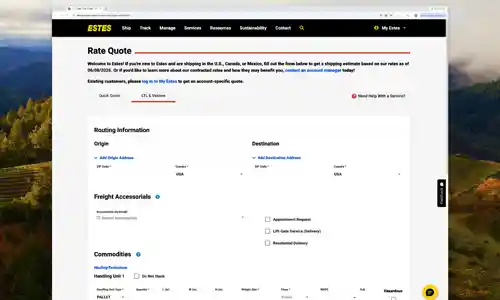
Estes’ Rate Quote tool allows shippers to get a quick estimate of their LTL costs simply by entering their freight’s origin, destination, weight, and shipment class. If the shipment class is unknown, this can be quickly estimated using Estes’ Class and Density Calculator.

Many LTL carriers give shippers the ability to generate instant quotes by submitting forms with basic information about the shipment, including the origin, destination, estimated shipment class, and weight. While basic information can be enough to generate a quote, providing more detail—such as the actual freight class, freight dimensions or accessorials required—will yield more accurate quotes.
Estes can provide shippers with instant freight quotes through its Quick Quote option and more exact pricing though its more detailed LTL & Volume quote option; these quotes are estimates based on current rates. Estes customers can log into My Estes to receive account-specific quotes.
Accessorial charges are fees for non-standard LTL shipping services that require special equipment or handling. Examples of accessorial charges include liftgate services, hazmat transport, overlength freight, white glove delivery, and storage.
Estes offers a wide range of non-standard shipping services. See our full list of accessorials.
When the location receiving freight does not have a raised loading dock, forklift, or pallet jack, a liftgate may be required to safely transfer freight from the trailer to the ground. The use of a liftgate is considered to be an accessorial—a non-standard shipping service that requires an additional charge.
When liftgates are required to safely deliver freight to residences and commercial destinations without docks, Estes has you covered. All Estes service centers are equipped with both standard and oversized 8-foot liftgates.
NMFC & LTL Freight Classes
National Motor Freight Classification (NMFC) is a tool developed by the National Motor Freight Traffic Association (NMFTA). NMFC groups all commodities into 13 classes (50 through 400). The classifications group virtually all commodities moving in interstate and intrastate transport by their “transportability.” providing standardization for both shippers and carriers.
Please visit the NMFTA website for additional guidance.
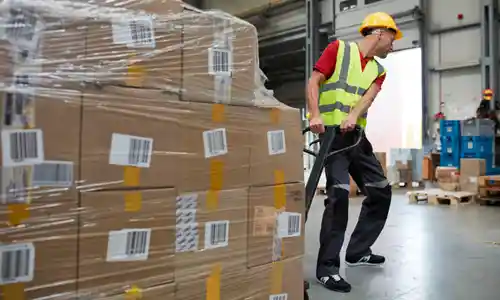
Density reflects the weight of the item relative to the amount of space it occupies, and is measured in pounds per cubic foot.
To determine density, start by determining the volume (or cube) of your freight. Multiply the freight's maximum length x maximum width x maximum height in inches—and be sure to include the pallet. Divide the volume in cubic inches by 1,728 to yield the volume in cubic feet. Divide the cubic feet figure by the weight to determine density.
Use Estes’ Class and Density Calculator to calculate the cube and density of your freight. Learn more about measuring and calculating dimensions in our comprehensive Shippers Guide.
Freight density is the primary factor in determining freight class, but it isn't the only one. Freight class also reflects the item's stowability, handling, and liability. Items that are more difficult to stow or to handle, or more susceptible to damage, may be designated at a higher freight class than other items with the same density.
LTL Packaging & Pallets
Palletizing LTL freight can be required by LTL carriers, especially when goods are fragile, high value, or heavy. Palletizing freight is strongly recommended as it safeguards against damage and allows loads to be moved more efficiently and with less risk.
Read our comprehensive Shipper's Guide or Helpful Guide to Freight Packaging to learn more about best practices that can reduce costs and safeguard against potential damage.
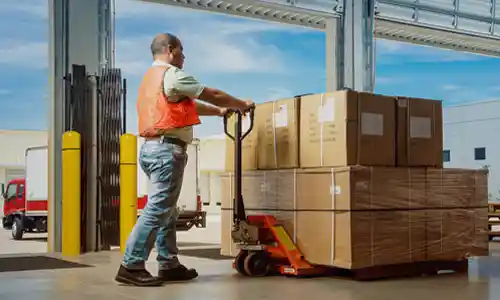
LTL freight that is denser, more compact, and more easily stackable costs less to ship. You can reduce empty space by using packaging and pallets that closely fit the size of the items, and by eliminating gaps or protrusions that increase load volume. You can also bundle goods tightly into stable, compact, and stackable loads by tightening and securing freight with stretch wrap, plastic film, or banding.
Properly labeling freight is another key component of freight packaging. The PRO number and consignee's full address should be visible on the shipping label. Labels should be placed on both the sides and top of your freight, as well as the inside and outside of your pallet wrap.
Read our comprehensive Shipper's Guide or Helpful Guide to Freight Packaging to learn more about best practices for packaging and palletizing freight. Watch our How to Accurately Label Your Freight video for additional insights.
While many LTL carriers will accept non-palletized freight, items will need to be properly secured through the use of crates, heavy-duty boxes, and banding or wrapping. Note that freight that is not palletized may be subject to additional handling fees and more likely to incur damage.
The standard pallet size is 48” x 40” with a maximum weight limit of 2500 lbs. While smaller pallets can be used, larger sizes may not be accepted by LTL carriers.
See Item 166 in our Rules Tariff to learn more about Estes' pallet specifications and practices.
Properly packaging your freight is the most effective way to prevent damage. Best practices include:
- Palletizing freight to add protection and allow loads to be moved more easily
- Selecting packaging materials that are strong, durable, and sufficiently load-bearing
- Securing freight with stretch wrap, plastic film, or banding
- Bundle goods tightly into compact, stable arrangements with no gaps
Read our comprehensive Shipper's Guide or Helpful Guide to Freight Packaging to learn more about best practices for packaging and palletizing freight.
Estes is committed to safeguarding freight during transport. Watch this video to learn how Estes’ captive beams and Webb walls keep your freight safe and secure.
LTL Transit & Delivery
While transit can take multiple days for long haul LTL shipments, carriers may offer next-day service for short haul routes. Some carriers may also offer online calculators that can provide instant, route-specific transit times.
Estes’ network supports nearly 7,000 next day lanes. Want to know if your freight can arrive next-day? Check out Estes’ Transit Time Calculator.
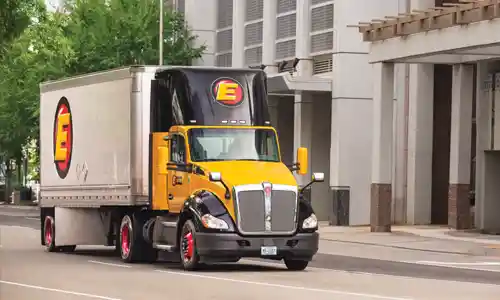
Guaranteed LTL service is a premium shipping option that promises the freight will arrive by, or on, a specific time or date. If the freight fails to arrive as promised, the shipper will be eligible for a partial or full refund of shipping charges.
Estes understands there’s nothing more valuable than the peace of mind that comes from knowing your freight will arrive on time and as promised. That's why Estes' The Complete Guarantee solutions—Time Critical Guaranteed, Estes Retail Guarantee™, and White Glove Guarantee—are designed for deliveries where timing, shipment quality, and execution are critical.
When a shipment is delayed, the consequences vary depending on the type of service used. For standard LTL shipments, transit times are estimates, and the shipper will not be compensated for delays. When a premium guaranteed service is used, the shipper will be eligible for a partial or full refund of shipping charges if the shipment is delayed.
Estes offers industry-leading Guaranteed Delivery solutions with 24/7/365 freight monitoring and customer support—and a 99.4% success rate in meeting all guarantees.
Yes. Many LTL carriers offer final mile freight delivery services to residences as well as other destinations without docks.
Estes offers both Final Mile Residential and Final Mile Commercial Non-Dock delivery—backed by decades of industry experience, a nationwide network, and the right tools for the job. Estes employs both standard and oversized 8-foot liftgates as well as electric pallet jacks, so we can efficiently handle large and heavy shipments. Learn more about our Final Mile delivery solutions.
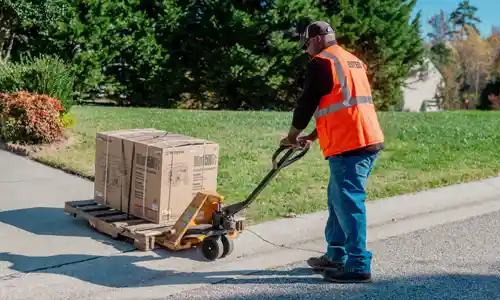
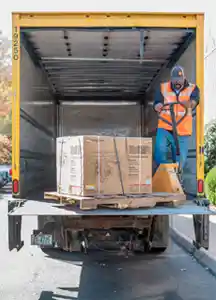
No. Many LTL carriers can use liftgates to safely transfer freight between the trailer to the ground. To ensure that a liftgate is on hand for delivery, the shipper should request liftgate service in the Bill of Lading.
All Estes service centers are equipped with standard and oversized 8-foot liftgates.
If a liftgate is required for the freight pickup or delivery, the shipper should specify the need for a liftgate when requesting their pickup and/or submitting their Bill of Lading; this will ensure that the arriving vehicle is equipped with a liftgate.
LTL Operations & Documents
A Bill of Lading (BOL) is a legal document that transfers the responsibility for freight to the carrier during its shipping transit. BOLs are required for all freight shipments and are essential to ensuring that freight is transported legally, quickly, and efficiently. Shippers are responsible for completing the BOL, and for reading and understanding all rules, regulations, contracts, and tariffs in effect on the date of the shipment.
Estes' Bill of Lading tool (requires login) offers intuitive, time-saving features and integrates with our Rate Quote tool to streamline the shipment preparation process. See the one-page overview of our Bill of Lading tool.
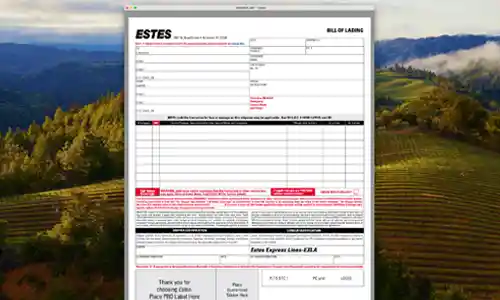
For an LTL shipment to be processed, a Bill of Lading (BOL) must be completed. The following information will be required to complete the BOL:
- Shipper and consignee address and contact information
- Billing information
- Accessorials (non-standard services) required
- Freight specifications - weight, dimensions, piece count
- Freight class and NMFC number (available via the NMFTA Class IT database or the manufacturer)
- Service options, such as guaranteed delivery
Estes' Bill of Lading tool (requires login) can save time by automatically loading information from other sources such as rate quotes, previous BOLs, or our Commodity Library (requires login).
Yes. Many LTL carriers are certified to transport hazardous materials. However, some materials—such as explosives, infectious substances, or radioactive materials—may be restricted or prohibited.
Estes is certified in the transport of hazardous materials. See our Rules Tariff or visit our Hauling Exclusions page to learn more about what Estes can and can't transport.
Yes. Many LTL carriers offer insurance options that provide stronger protection against loss or damage than standard liability coverage.
Estes’ Full Value Coverage (FVC) covers your shipment at its invoice value in the event of loss or damage. FVC may be requested through our Rate Quote and Bill of Lading tools, or when clearly written on the Bill of Lading. Learn more about FVC.
PRO numbers are 10-digit freight bill numbers given to each shipment to serve as tracking numbers.
In addition to being used to track shipments via our Shipment Tracking tool, Estes PRO numbers can also be used to:
- Request images of delivery receipts, Bills of Lading and weight & research certificates via our Document Retrieval tool
- View delivery receipts, Bills of Lading and weight & research certificates via our Document Viewing tool (requires login)
- Retrieve invoices via our Invoice Inquiry tool (requires login)
Yes. Many LTL carriers offer pickup scheduling on their websites.
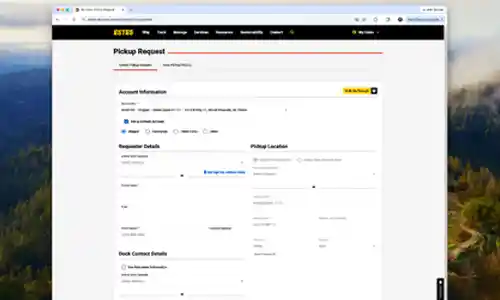
Estes' Pickup Request tool (requires login) lets My Estes users save time with pre-filled fields, add multiple shipments to one request, provide dock contact information, and capture any extra details required to ensure a safe, efficient pickup.